
PP FRP Scrubber
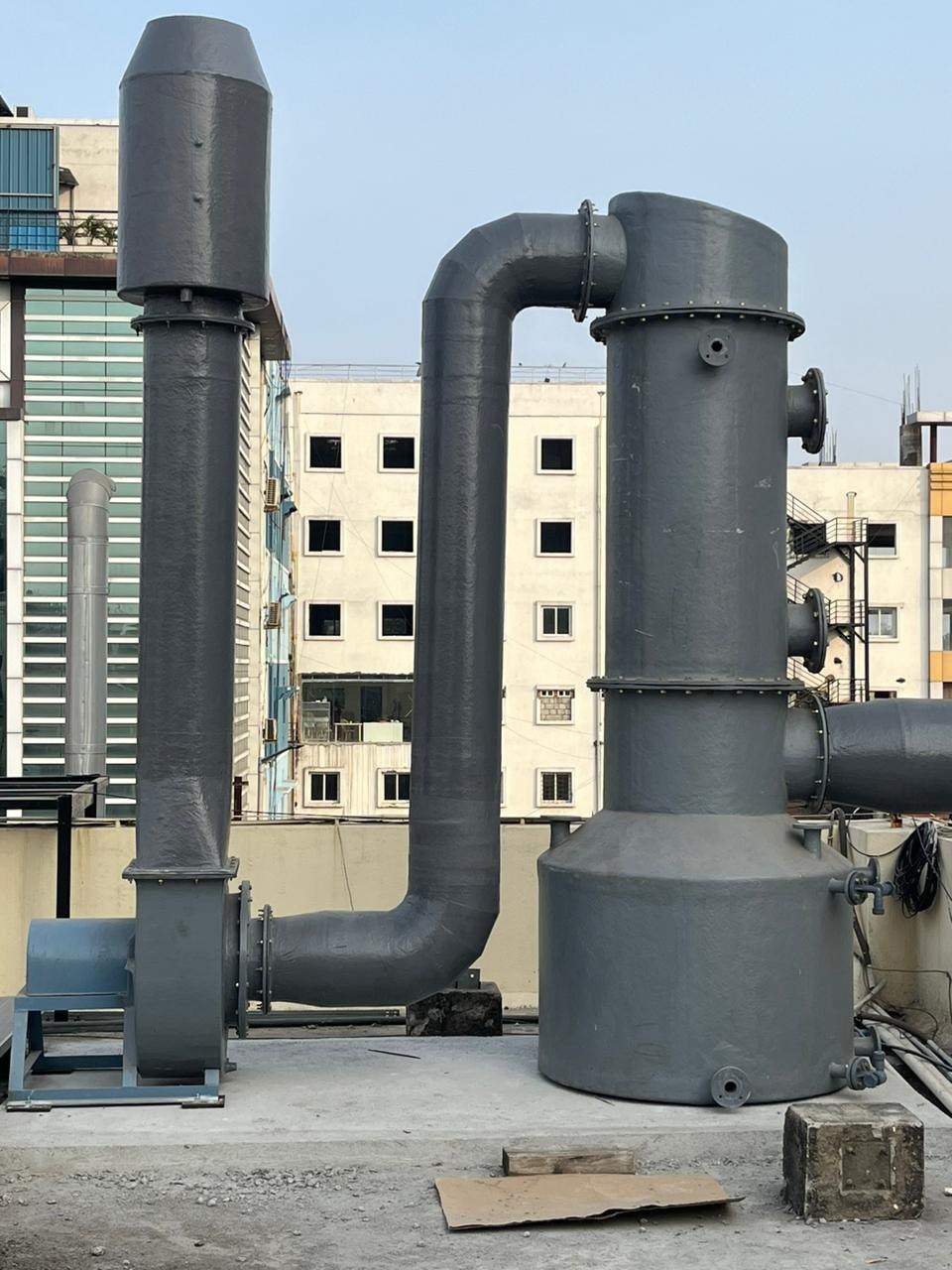
A PP FRP scrubber is an air pollution control device used to remove harmful pollutants, odors, and contaminants from industrial exhaust gases. It's constructed using a combination of polypropylene (PP) and fiberglass-reinforced plastic (FRP), offering excellent corrosion resistance and durability in harsh chemical environments. These scrubbers are commonly used in industries like chemical processing, wastewater treatment, and metal refining.
Here's a more detailed description:
Materials:
- Polypropylene (PP): Provides excellent resistance to a wide range of corrosive chemicals.
- Fiberglass Reinforced Plastic (FRP): Adds structural strength and durability to the scrubber, enabling it to withstand demanding industrial conditions.
Function:
-
Pollutant Removal:
PP FRP scrubbers remove harmful gases, particulate matter, and odors from exhaust streams through absorption, adsorption, or chemical reactions.
-
Corrosion Resistance:
The materials used in PP FRP scrubbers are highly resistant to corrosion from acidic and alkaline gases, making them suitable for use in various industrial applications.
-
Durability:
FRP reinforcement ensures the scrubber can withstand high temperatures, pressures, and other harsh conditions.
-
Low Maintenance:
PP FRP scrubbers are designed for long service life with minimal maintenance requirements.
Applications:
- Chemical Processing: Removing corrosive gases like HCl, SO2, and NH3.
- Wastewater Treatment: Treating exhaust from wastewater treatment plants.
- Metal Finishing: Cleaning exhaust from metal plating and other processes.
- Other Industries: Widely used in various other industries where corrosive or hazardous gases are generated.
Types:
- Wet Scrubbers: Utilize a liquid (usually water or a chemical solution) to capture pollutants from the exhaust gas.
- Packed Bed Scrubbers: Use a packed bed of material to increase the surface area for gas-liquid contact, improving pollutant removal.
- Spray Towers: Use a spray of liquid to capture pollutants.
Key Benefits:
- Corrosion Resistance: Handles corrosive gases effectively.
- Durability: Withstands harsh industrial environments.
- Cost-Effective: Offers a balance of performance and cost.
- Environmentally Friendly: Helps reduce harmful emissions from industrial processes.