
Fume Hood
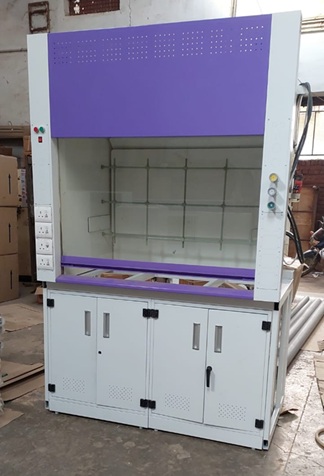
A fume hood is a crucial piece of safety equipment in a laboratory, designed to protect researchers and other personnel from hazardous fumes, vapors, and particulate matter produced during experiments. It acts as a ventilated enclosure that captures, contains, and removes these substances, preventing them from spreading into the laboratory environment.
Here's a more detailed description:
Function:
-
Local Exhaust Ventilation:
Fume hoods are a type of local exhaust ventilation system, meaning they focus on removing contaminants at their source, rather than relying on general ventilation for the entire room.
-
Containment:
They enclose the work area, creating a physical barrier between the experiment and the user, preventing the escape of harmful substances.
-
Airflow:
They utilize airflow patterns to draw air and airborne contaminants into the hood and away from the user, typically exhausting them outside the building or through a filtration system.
Key Components:
-
Hood Structure:
The outer shell is typically made of chemical-resistant materials like stainless steel.
-
Sash:
A movable transparent panel (often glass or plastic) that can be adjusted to create a barrier between the user and the experiment.
-
Baffles:
Vertical panels or slots within the hood that help direct airflow and minimize turbulence, ensuring efficient capture of fumes.
-
Airfoil:
The beveled frame around the hood opening that further enhances airflow and reduces turbulence.
-
Exhaust System:
A fan (located on top of the building or elsewhere) draws air through the hood and ductwork to the outside.
Types of Fume Hoods:
-
Ducted:
These are the most common type, exhausting fumes and vapors through ductwork to the outside.
-
Ductless:
These use a filtration system to remove contaminants before recirculating the air back into the room.
-
Constant Volume:
These maintain a constant airflow rate, regardless of sash position.
-
Variable Air Volume (VAV):
These adjust the airflow rate based on sash position, optimizing energy efficiency.
Importance:
-
Safety:
Fume hoods are essential for protecting lab personnel from exposure to hazardous chemicals, reducing the risk of health problems, and creating a safer work environment.
-
Compliance:
Many laboratories are required to use fume hoods when handling hazardous materials, and they may be subject to inspections to ensure proper functionality.
-
Experimentation:
Fume hoods can facilitate a wider range of experiments, particularly those involving volatile or toxic substances, by providing a contained and controlled environment.